
 By Kylian Dev
When is the rainy season in Thailand? The two monsoons explained simply
Forget the idea of one national rainy season: Thailand has two wind systems that hit its coasts at different times.
From roughly May to October the southwest monsoon blows moist air off the Indian Ocean onto the west-facing Andaman coast and inland over Bangkok, the centre and the north. Phuket, Khao Lak, Krabi, Koh Phi Phi and Koh Lanta sit directly in its path, which is why their seas turn rough and grey in these months. The Gulf of Thailand islands, sheltered behind the mountains of the peninsula, stay comparatively dry during the same period.
Around October the winds reverse. The northeast monsoon then brings its moisture across the Gulf of Thailand, so Koh Samui, Koh Phangan and Koh Tao get their heaviest rain from October to December, often peaking in November. At the same time the north and Bangkok dry out and the Andaman coast begins its high season. In short: west coast wet in the European summer, east-side islands wet in the European autumn.
Andaman coast
May to OctoberPhuket, Khao Lak, Krabi, Railay, Koh Phi Phi, Koh Lanta and Koh Lipe. Wettest and roughest usually in September and October.
Gulf of Thailand
October to DecemberKoh Samui, Koh Phangan and Koh Tao. Relatively dry in July and August, heaviest rain from October to December, often peaking in November.
North and centre
June to OctoberBangkok, Chiang Mai, Chiang Rai, Pai, Ayutthaya and Sukhothai. Most rain from June to October, with September often the wettest.

What does the rain look like day to day?
In most places the rainy season does not mean constant rain. A typical day starts bright and humid, clouds build up by early afternoon and a heavy tropical shower falls for thirty minutes to two hours, often with thunder, before the sky clears again for the evening. Many days are completely dry. The real problem is the occasional low-pressure system that parks over a coast and brings two to four grey, windy days in a row, which happens most often at the peak of each monsoon.
On the Andaman coast the bigger issue is often the sea rather than the rain: strong swell, murky water and red flags on west-facing beaches such as Patong, Kata and Karon in Phuket. In Bangkok a downpour can flood streets for an hour and jam traffic, so allow extra time before a flight. In the north, rain makes mountain roads slippery and trekking paths muddy, but it also fills the waterfalls and turns the rice terraces bright green.
| Pattern | What to expect | How to plan |
|---|---|---|
| Typical rainy day | Sunny morning, 1 to 2 hours of heavy rain in the afternoon or evening | Do outdoor visits and boat trips in the morning |
| Storm spell | 2 to 4 days of cloud, wind and intermittent rain | Keep flexible days, switch to a city or the other coast |
| Peak month | Rain on most days, rough seas, possible local flooding | Avoid tight connections and small boats |
| Shoulder month | Mostly dry with occasional showers | Often the best value of the year |
Where to go in Thailand in the rainy season, month by month
The table gives the general picture; the notes below say where to go and where to avoid each month.
Think of the year as a relay between the coasts. From May to October the Gulf islands hold the best beach weather while the Andaman side and the north take the rain; October is the handover month; from November the Andaman coast and the north are at their best while the Gulf gets its turn. Bangkok is visitable all year, with short, heavy showers from June to October. Always check the forecast a week out, as the monsoon can arrive or leave a few weeks early or late.
| Month | Andaman coast | Gulf islands | North and centre |
|---|---|---|---|
| May | Rain begins, seas get rougher | Good, mostly dry | Very hot, first storms |
| June | Rainy, rough seas | Good, mostly dry | Showers begin, green |
| July | Rainy, strong swell | Best choice for beaches | Afternoon showers |
| August | Rainy, strong swell | Best choice for beaches | Afternoon showers |
| September | Often the wettest month | Fair, some rain | Wettest period, flood risk |
| October | Improving late in the month | Rain increasing | Drying out late in the month |
| November | Good, high season starts | Often the wettest month | Good, cooler, festivals |
| December | Excellent, busy | Improving, still showers | Excellent, cool mornings |
- May: a shoulder month. Go to the Gulf islands or Bangkok; the Andaman coast is still fine early in the month but seas build. Avoid planning Similan trips, as the park closes every year on 15 May.
- June: go to Koh Samui, Koh Phangan or Koh Tao and to Chiang Mai while it is still fairly dry. Avoid relying on Andaman speedboat day trips.
- July: go to the Gulf islands for beaches, combine with Bangkok and the north. Avoid swimming off west-facing Phuket beaches with red flags.
- August: same verdict as July, but busier and pricier on Koh Samui with European holidays. Avoid Koh Chang if you want sunshine.
- September: the hardest month overall. The Gulf islands are the safest bet; avoid remote Andaman islands, small resorts and trekking in the north.
- October: a transition month. The Gulf gets wetter, the Andaman and north improve in the second half. Go to Chiang Mai, Bangkok or Krabi late in the month.
- November: go to the Andaman coast (Krabi, Koh Lanta, Phuket, Khao Lak) and the north for Loy Krathong. Avoid Koh Samui, Koh Phangan and Koh Tao if beaches are the main goal.
- December: almost everywhere is good except the Gulf, which improves through the month. Book ahead, as this is peak season.
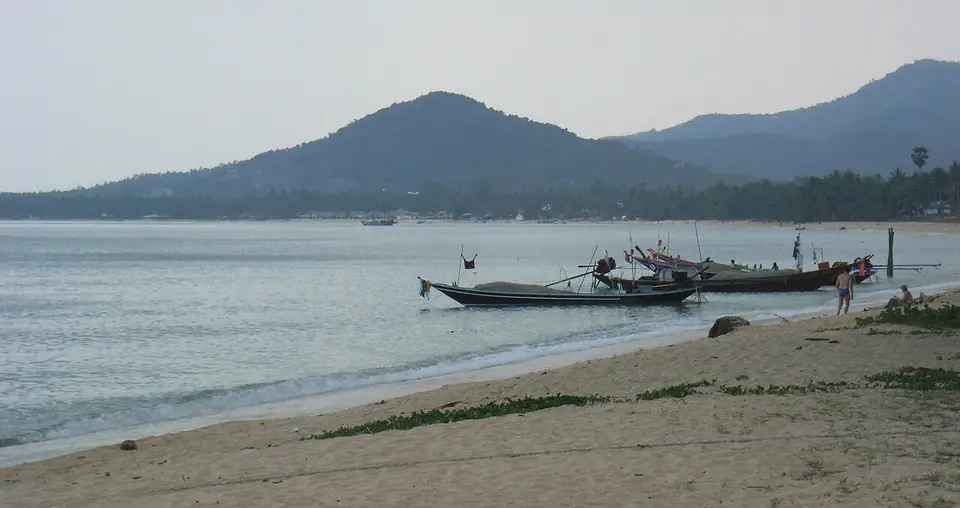
Which Thai islands are best in the rainy season? Island-by-island verdict
For a beach holiday between June and September, the Gulf islands are the clear winners, and Koh Samui is the easiest because it has an airport, many sheltered bays and plenty of indoor options. From November to April the ranking flips and the Andaman islands shine. The table below gives a simple verdict for the most popular islands; note that the south of the Andaman coast (Koh Lipe) and the east (Koh Chang) have their own timings.
| Island or area | Best months | Rainy season verdict |
|---|---|---|
| Koh Samui | January to August | Great in July and August; avoid November |
| Koh Phangan | January to August | Good in summer; Full Moon Party runs year round |
| Koh Tao | March to September | Top choice for summer diving; wet in November |
| Phuket | November to April | Workable in summer on the east side; rough west beaches |
| Krabi and Railay | November to April | Climbing and scenery still fine; boats limited |
| Koh Lanta | November to April | Many resorts close from about May to October |
| Koh Phi Phi | November to April | Rough crossings, Maya Bay closes part of the year |
| Koh Lipe | November to May | Much reduced boat service in the low season |
| Koh Chang and Koh Kood | November to May | Wet from June to September, some boats stop |
Ferries, speedboats and diving in the rainy season
The rainy season has a direct effect on boats. On the Andaman side, many speedboat routes linking Phuket, Krabi, Koh Phi Phi, Koh Lanta and Koh Lipe run a reduced low-season schedule, and some island-hopping connections stop altogether. Crossings can be rough and are occasionally cancelled when the marine department issues wind warnings. Large car ferries and big catamarans are more reliable than small speedboats, which are the first to be pulled.
In the Gulf, the Lomprayah and Seatran Discovery catamarans between Chumphon, Koh Tao, Koh Phangan and Koh Samui run year round, but the November crossing can be very choppy. For diving, the Similan and Surin national parks close every year from 15 May to 15 October (2026 reopening: 15 October 2026), so Andaman liveaboards stop. Koh Tao is the natural alternative, with generally calmer water and decent visibility from about June to September. The Department of National Parks confirms the exact dates each year, so check before you book.
- Leave a buffer day between an island ferry and an international flight
- Prefer morning departures, when seas are usually calmer
- Book flexible tickets and keep the operator's contact details
- Take seasickness tablets before rough crossings, not during
- Pack electronics in a dry bag on speedboats
What to do in Thailand when it rains
Plenty of activities still work, and some are better in the green season. Waterfalls such as Erawan near Kanchanaburi or those around Chiang Mai are at their fullest, national parks like Khao Sok are lush and misty, and rice terraces in the north glow green in July and August. In cities, heavy showers are simply a cue to head indoors for an hour.
Temples and museums
CultureBangkok's Grand Palace, Wat Pho and museums, Ayutthaya and Sukhothai are best visited in the morning before the rain.
Cooking classes
IndoorChiang Mai, Bangkok and the islands all offer half-day Thai cooking classes, usually under cover.
Spa and massage
RelaxA traditional Thai massage or a spa afternoon is the classic rainy-day plan, and low-season spa deals are common.
Khao Sok and waterfalls
NatureJungle, lakes and waterfalls are at their best, though some trails may close after heavy rain.
Diving on Koh Tao
SeaFrom June to September the Gulf is the place to learn to dive or add fun dives.
Markets and malls
CityCovered night markets, food courts and Bangkok's big malls make rainy evenings easy.
Low-season prices and crowds: how much can you save?
Outside the Gulf in July and August, the rainy season is Thailand's low season, and hotel prices on the Andaman coast often drop noticeably compared with December to March. Mid-range and upmarket resorts are where the discounts are most visible, and you can often book good rooms at short notice. Flights from Europe are driven more by school holidays than by Thai weather, so July and August fares stay high even when hotels are cheap.
| Area | Rainy-season crowds | Hotel prices vs high season |
|---|---|---|
| Phuket, Krabi, Khao Lak | Quiet | Often clearly lower |
| Koh Lanta, Koh Lipe | Very quiet, some closures | Lower where open |
| Koh Samui, Koh Phangan, Koh Tao (July to August) | Busy | Near high-season level |
| Bangkok | Normal | Slightly lower |
| Chiang Mai and the north | Quiet | Lower |
Is it safe to travel to Thailand in the rainy season?
Yes, for most travellers, provided you respect the sea and the roads. The main risks are drowning in rip currents on Andaman beaches, scooter crashes on wet roads, local flooding in Bangkok and parts of the centre or north around September and October, and mosquito-borne diseases such as dengue, which increase in the wet months. Landslides can occasionally close mountain roads in the north.
- Swimming when a red flag is flying, especially at Patong, Kata, Karon or Khao Lak
- Riding a scooter in heavy rain or at night on wet roads
- Trekking or canyoning after days of heavy rain
- Booking a same-day ferry and international flight
- Skipping mosquito repellent at dawn and dusk
Travelling in the green season: pros and cons
Whether the rainy season suits you depends on flexibility. If you can move between coasts and accept a few showers, you gain lower prices, empty viewpoints and dramatic landscapes. If your trip is short and built around one Andaman beach or specific boat trips, the risk of disappointment is higher.
- Lower hotel prices and easy last-minute availability
- Lush green landscapes, full waterfalls and rice fields
- Fewer crowds at temples, viewpoints and beaches
- Slightly cooler temperatures than in the hot season
- Rough seas and red flags on Andaman beaches
- Reduced or cancelled ferries and speedboats on some routes
- The Similan and Surin national parks close every year from 15 May to 15 October
- Some small island resorts and restaurants close for the season
- More mosquitoes, so dengue precautions matter
What to pack for the rainy season in Thailand
Heavy waterproof gear is unnecessary in 28 to 33 degree heat. What helps is light, quick-drying clothes, protection for electronics and footwear that can get wet. Anything you forget is easy to buy in any 7-Eleven or local market, from ponchos to umbrellas. For a complete list, use our packing list generator for Thailand.
- A thin rain jacket or a cheap poncho rather than a heavy coat
- A compact umbrella, useful for both rain and sun
- Quick-dry clothing and a spare set in a plastic bag
- Sandals or water shoes that can get soaked
- A dry bag and a waterproof phone pouch for boats
- Strong mosquito repellent (DEET or icaridin)
- Seasickness tablets if you plan island hopping
- Travel insurance that covers weather disruptions
Floods in Thailand: where, when and how to travel safely
Last reviewed September 2026. Most trips are never affected, but it pays to know where and when water rises.
Flooding in Thailand follows the monsoons. It usually hits specific provinces for days or weeks rather than the whole country, and tourist areas often keep running normally while nearby rural districts are under water.
| Region | Usual flood period | What happens |
|---|---|---|
| North (Chiang Rai, Chiang Mai) and north-east | August to October | River floods and flash floods, landslides in the hills |
| Central plains (Ayutthaya, Sing Buri, Nakhon Sawan) | September to November | Chao Phraya basin rivers overflow, slow-moving floods |
| Bangkok low-lying areas | September to November | Flooded streets after downpours, usually drained within hours |
| South, Gulf side (Hat Yai, Songkhla, Nakhon Si Thammarat, Surat Thani) | November to January | North-east monsoon rain, sometimes severe floods |
| Andaman coast (Phuket, Krabi, Phang Nga) | May to October | Short flash floods and landslides after very heavy rain |
- 2011: the worst floods in decades covered large parts of the central plains and northern Bangkok for weeks.
- September 2024: rain linked to Typhoon Yagi caused severe floods in Chiang Rai province, including the border town of Mae Sai and Chiang Rai city.
- November 2025: severe floods hit the southern provinces, notably Hat Yai and Songkhla, while Bangkok, Chiang Mai and Phuket were reported unaffected by TAT.
- Follow the Thai Meteorological Department (tmd.go.th) warnings and the DDPM (Department of Disaster Prevention and Mitigation)
- Read the TAT newsroom (tatnews.org) for travel condition updates
- Register with and follow your embassy's travel advice
- Take travel insurance that covers weather disruption and cancellations
- Prefer flexible, refundable bookings from August to November
- Expect ferries to be cancelled when the TMD issues high-wave warnings
Sample rainy-season itineraries
The simplest strategy is to pair the region that is dry with cities or the north, which suffer less from rain than the sea does. Use these templates as starting points and adjust once you see the forecast.
July or August, 2 weeks
SummerBangkok 3 nights, Chiang Mai 4 nights, then Koh Samui, Koh Phangan or Koh Tao for 7 nights via a flight to Samui or the train and boat via Chumphon.
September, 12 days
Peak rainBangkok, Kanchanaburi and Ayutthaya, then 6 nights on Koh Samui with a Koh Tao day trip. Skip long treks and remote islands.
November, 2 weeks
AutumnChiang Mai for Loy Krathong, Bangkok, then Krabi, Railay and Koh Lanta as the Andaman high season opens.
July or August, 2 weeks
14 days- 1Bangkok3 d
- 2Chiang Mai4 d
- 3Koh Samui7 d