
 By Kylian Dev
Why riding, shows and hands-on contact are a problem
What the welfare research actually shows.
Asian elephants are wild animals, not a domesticated species. For an elephant to accept a rider, perform tricks or let crowds scrub it in a river, it usually has to be trained from a young age with restraint and punishment, then controlled with hooks or chains for the rest of its life. That is why welfare groups consider riding, shows and close contact to be the same problem in different packaging.
The most detailed data comes from World Animal Protection. Its report Bred to Entertain, published on 12 January 2026, assessed 236 tourism venues holding 2,849 elephants across Thailand between February 2024 and January 2025, and compared the results with its surveys since 2010.
| Finding (World Animal Protection, 2026) | Figure |
|---|---|
| Elephants living in poor conditions | About 2 in 3 |
| Elephants kept on short chains during the day | More than half |
| Elephants at venues offering rides | 43% in 2024, down from 92% in 2010 |
| Elephants at venues offering washing or care activities | More than half in 2024 |
| Elephants at observation-only venues | 7.3% in 2024, up from 4.6% in 2010 |
| Captive elephants in tourism since 2010 | Up by more than 70% |
The bathing debate: why many sanctuaries stopped
The photo everyone wants, and why it is fading out.
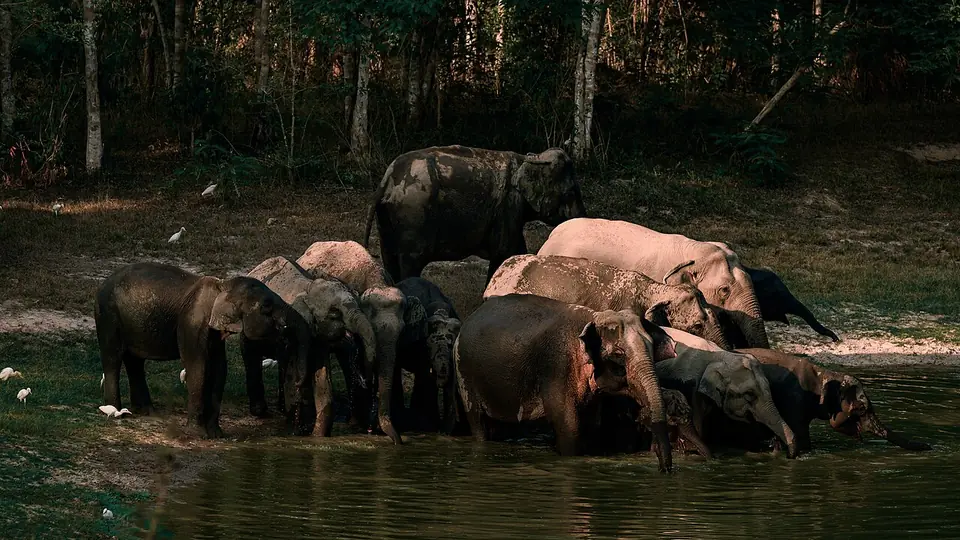
A few years ago, bathing with elephants was marketed as the kind alternative to riding. Today a growing number of respected venues have dropped it, including Elephant Nature Park in Chiang Mai, Phuket Elephant Sanctuary, Samui Elephant Sanctuary and Following Giants, according to their own websites in September 2026.
- Several groups of tourists a day in the water means the elephant is kept close and controlled, often by a mahout with a hook
- The water time is scheduled around visitors, not around when the elephant wants to bathe
- Close contact is a real safety risk: elephants are large and unpredictable, and people are injured every year
- World Animal Protection's guidance is blunt: if you can get close enough to ride, bathe or touch an elephant, it has been trained to accept it
Some venues argue that supervised bathing is gentle and helps fund rescued elephants. I respect that many of them do care for their animals, but my own rule is simple: I choose places where the elephants bathe on their own while I watch from the bank. It is a better experience anyway, because you see natural behaviour instead of a staged photo.
How to spot a genuinely ethical elephant sanctuary
The checklist I use before I book anything.
- Observation only: you watch from a distance while the elephants graze, walk and socialise
- No riding of any kind, not even bareback or a short ride
- No bathing, washing or hands-on sessions, and ideally no hand-feeding
- No shows, painting, football or tricks
- Small groups and a limited number of visits per day
- No baby elephants used as an attraction, and no breeding programme to supply new animals
- Transparent origin: they tell you where each elephant came from and why it is there
- Resident or on-call vet care, and enough space for elephants to roam and form their own groups
- Elephants are not chained for most of the day and are not kept on concrete
Red flags and fake sanctuary marketing
Words are cheap. Look at the photos and the schedule.
- Photos of tourists hugging, kissing or sitting on elephants
- A fixed timetable of feeding, mud spa and bathing slots, several times a day
- Baby elephants presented as a highlight or available for photos
- Mahouts holding bullhooks or elephants swaying repetitively, a common stress behaviour
- Rides described as bareback, gentle or only for a few minutes
- Dozens of visitors per session and buses arriving back to back
- Words like rescue, eco or conservation with no information about the elephants' origin
- Very cheap tours sold by street agents that do not name the venue
Many venues that were riding camps a few years ago simply renamed themselves sanctuaries. That is not always bad news, because some genuinely changed their model, but it means the name alone proves nothing. I always look at recent visitor photos, not only the official ones.
Ethical elephant sanctuaries by region
Places frequently cited by welfare groups and travellers. Formats are based on each venue's website in September 2026: always check their current policy.
| Region | Frequently cited places | Format (per venue, Sept 2026) | Indicative price |
|---|---|---|---|
| Chiang Mai | Elephant Nature Park; Kindred Spirit, ChangChill, Burm and Emily's, Mahouts Elephant Foundation | No riding or bathing; some programmes include food preparation or feeding | About 2,500 THB half day, 3,500 THB full day at Elephant Nature Park |
| Sukhothai | Boon Lott's Elephant Sanctuary (BLES) | Small overnight stays and a lunch experience, booked in advance | Check their website |
| Phuket | Phuket Elephant Sanctuary | Observation only, no riding, bathing or feeding | 1,900 THB canopy walk, 3,000 THB half day |
| Koh Samui | Samui Elephant Sanctuary (Bophut and Chaweng Noi) | Walk with and feed the elephants, no riding or bathing | About 2,900 THB adult (low season web price) |
| Krabi and Koh Lanta | Following Giants | Observation only, no riding, bathing or feeding | Check their website |
| Khao Sok | Elephant Hills, Khao Sok Elephant Sanctuary | Elephant Hills stopped hand-feeding in May 2026; guests prepare food and observe | Part of multi-day packages at Elephant Hills |
| Kanchanaburi | Somboon Legacy Foundation | Listed by World Animal Protection as elephant-friendly | Check their website |
Chiang Mai has the largest choice, with most venues in the hills of Mae Taeng, Mae Wang and Mae Chaem, one to three hours from the old city with hotel pickup included. In Phuket, the sanctuary sits next to Khao Phra Thaeo National Park in the north of the island. On Koh Samui, the two sites are easy half-day trips from Chaweng and Bophut. From Krabi or Ao Nang, Following Giants is the nearest observation-only option, and it also has a site on Koh Lanta.
Well-known sanctuaries at a glance
Neutral summaries based on what each venue publishes. Policies change, so read their current terms.
Elephant Nature Park, Chiang Mai
Chiang MaiFounded by Lek Chailert, in the Mae Taeng valley about an hour north of Chiang Mai. Large herd living in open areas with river access. No riding and no bathing; some programmes include preparing food and feeding. Many other animals live there too.
Boon Lott's Elephant Sanctuary
SukhothaiSmall, long-running sanctuary in Sukhothai province. Visits are mainly overnight stays in small numbers, with a lunch experience also offered. Listed by World Animal Protection as elephant-friendly.
Phuket Elephant Sanctuary
PhuketHome for retired working elephants on forest land bordering Khao Phra Thaeo National Park. Describes itself as observation only, with a canopy walkway, half-day and full-day programmes.
Samui Elephant Sanctuary
Koh SamuiTwo sites on Koh Samui, in Bophut and Chaweng Noi. Follows a saddle-off model: no riding and no bathing, but guests can feed and walk with the elephants.
Following Giants
KrabiTwo sites, near Ao Nang in Krabi and on Koh Lanta. States clearly that it offers no riding, bathing or feeding: you watch the elephants from a distance with a guide.
Elephant Hills
Khao SokTented jungle camp near Khao Sok National Park. Since May 2026 guests no longer hand-feed the elephants: they prepare food that the elephants eat in their habitat and spend more time observing.
The best alternative: see wild elephants in national parks
Thailand still has around 4,000 wild elephants.
If you want the most authentic encounter, go and see elephants that nobody owns. Sightings are never guaranteed, but in the two parks below they are frequent, and you pay the national park rather than a private business.
| Park | Where | How it works | Indicative cost |
|---|---|---|---|
| Kui Buri National Park | Prachuap Khiri Khan, about 1.5 h south of Hua Hin | Afternoon safari in park vehicles with a ranger at the Huai Luek wildlife watching area; elephants and gaur are seen on most visits | 200 THB park fee per foreign adult plus 1,200 THB per safari vehicle (since May 2026) |
| Khao Yai National Park | About 3 h north-east of Bangkok | Wild elephants are often seen on the main park road, especially late afternoon; also gibbons, hornbills and waterfalls | About 400 THB park fee per foreign adult; guided tours extra |
How much does an ethical elephant visit cost?
Indicative prices per adult in 2026, usually with hotel pickup and a meal.
| Type of visit | Indicative price (THB) | Notes |
|---|---|---|
| Short visit or canopy walk (1.5 to 2 h) | About 1,500 to 2,000 | Good with young children |
| Half day | About 2,500 to 3,500 | The most popular option |
| Full day | About 3,500 to 6,000 | More walking and time with the herd |
| Overnight stay | From about 5,800 | Quieter evening and morning with the elephants |
| Wild elephant safari (Kui Buri) | About 1,200 per vehicle plus park fees | Split between up to several passengers |
Prices vary with season, transfers and group size, and resellers add their margin. I book directly on the sanctuary's website whenever possible, so more of the money reaches the elephants and I know exactly which venue I am going to. Add it to your trip total with our Thailand travel budget calculator.
How I would plan an ethical elephant day
Five steps that work anywhere in Thailand.
- 1Pick the region you are already visiting instead of detouring for a famous name
- 2Shortlist two or three places and read their current policy on riding, bathing and feeding
- 3Check recent visitor photos and the World Animal Protection list
- 4Book directly, weeks ahead in high season from November to March, as small groups fill fast
- 5On the day, keep your distance, follow the guide and leave the selfie stick at the hotel