
 By Kylian Dev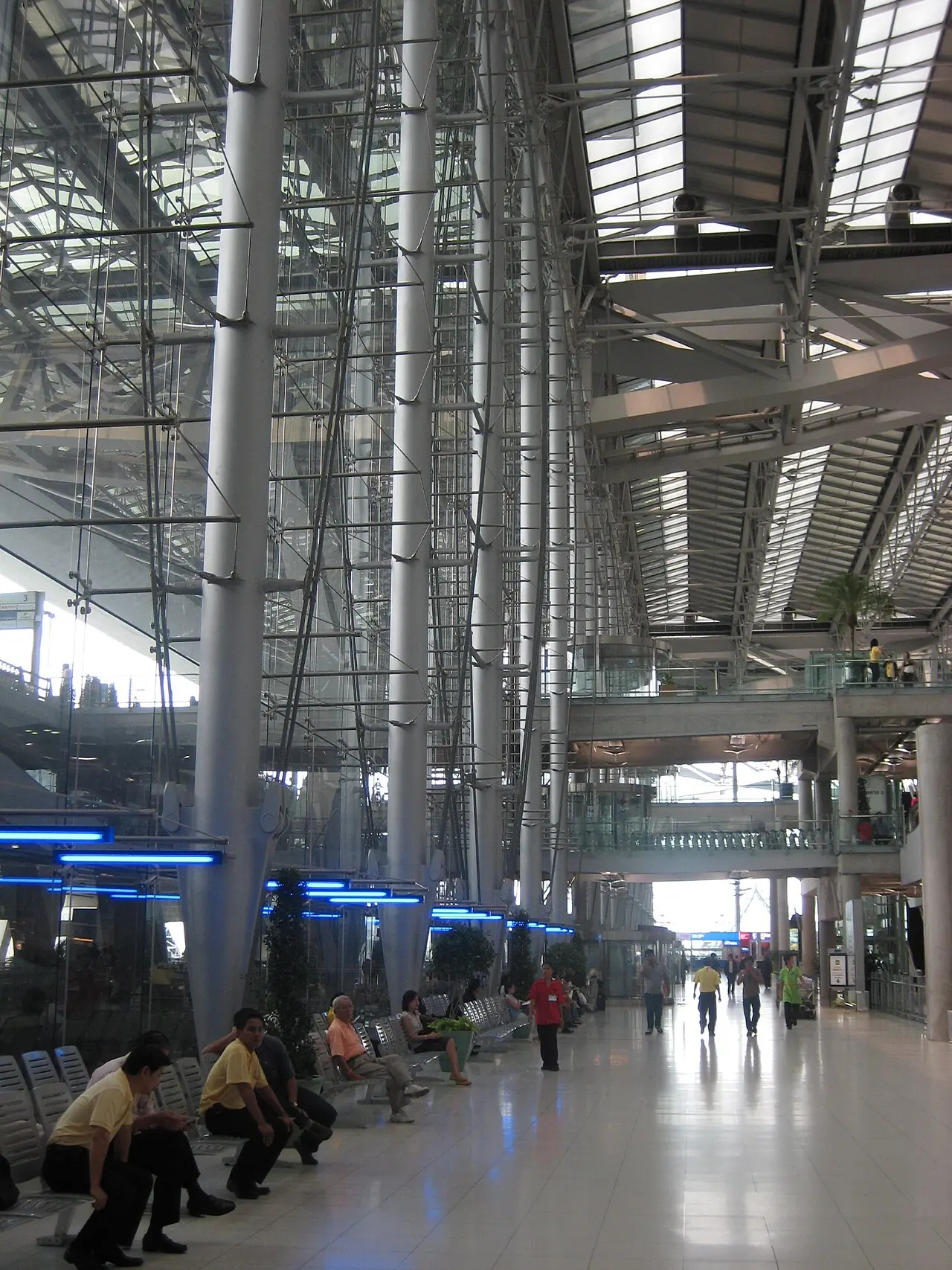
eSIM or local SIM: what is the difference?
Both give you Thai mobile data. What changes is where you buy it, when it works and what it costs.
| eSIM bought at home | Tourist SIM at the airport | |
|---|---|---|
| Where you buy it | Online, before you leave | Operator counter in the arrivals hall |
| When it works | As soon as the plane lands | After the queue and registration, 10 – 30 min |
| Price for 8 days | About 9 to 25 USD | 299 to 449 THB (about 8 to 12 EUR) |
| Thai phone number | Usually not: data only | Yes, with local calls |
| Your home SIM | Stays in the phone | Removed, unless you have dual SIM |
| Passport check | None | Original passport and a live photo |
An eSIM is a SIM profile downloaded by QR code. Your physical SIM stays in place, so you keep receiving bank text messages on your home number while using Thai data. A local SIM is a plastic card, or an eSIM issued by a Thai operator in store, sold in tourist packs with a Thai number.

AIS, True or dtac: what do tourist packs cost in 2026?
Thailand has two networks: AIS, and True, which absorbed dtac in 2023. dtac survives as a brand on True’s network.
| Operator | 8 days | 15 days | 30 days | Data |
|---|---|---|---|---|
| AIS | 299 THB (15 GB) or 499 THB (unlimited) | 699 THB (unlimited) | 899 THB (50 GB) or 1,199 THB (unlimited) | 5G |
| TrueMove H | 449 THB | 699 THB | 1,199 THB | Unlimited, 5G |
| dtac | 449 THB | 699 THB | 1,199 THB | Unlimited, same network as True |
AIS
Best coverageThe largest network in the country and the most reliable on small islands, in national parks and in the mountains of the north. The 299 THB pack is the best value for a week.
TrueMove H
Unlimited dataUnlimited data plus free local calls and a little credit for international calls. Very good in cities and on the main islands.
dtac
Same as TrueSame packs, same prices and, since the networks were merged in 2025, the same antennas as True. Pick whichever counter has the shorter queue.
Prices at the airport counters are the same as in town. Operators sometimes rename packs, but the three price levels above have held for several years. Counters also sell a 1-day pass for around 50 THB, handy if you are only transiting through Bangkok.
Buying a SIM at the airport: how it works
At Suvarnabhumi, Don Mueang, Phuket, Chiang Mai and Samui, the AIS and True counters are in the arrivals hall, after customs.
- 1Choose your pack from the board at the counter: the prices are displayed.
- 2Hand over your original passport. A photo or a scan is no longer accepted.
- 3Look into the tablet camera: since August 2025, every new SIM is registered with a live face check.
- 4The staff member inserts and activates the SIM. Test data and a text before you walk away.
- 5Keep the SIM holder: the number and top-up code are printed on it.
The queue is the real downside. After a wave of long-haul arrivals in the morning, allow 20 to 30 minutes. If you land at night, most counters stay open late at Suvarnabhumi, but not at smaller airports: that is where an eSIM installed at home is worth its price.

How to install an eSIM before you leave
Ten minutes at home, on Wi-Fi, a few days before departure.
- 1Check that your phone supports eSIM and is unlocked (see the phones section below).
- 2Buy the plan and scan the QR code, or tap “install” in the provider’s app.
- 3Rename the lines (“Home” and “Thailand”) so you do not mix them up.
- 4Leave the Thai eSIM switched off until you land: most plans start counting days at the first connection.
- 5On landing: switch mobile data to the Thai eSIM, turn on data roaming for that line only, and turn it off on your home line.
Thai operators also issue eSIMs: True converts any tourist pack to eSIM at the same price, and AIS does so at its counters. That is the only local option for an iPhone without a SIM tray, such as the US models since the iPhone 14.
Which is cheaper, eSIM or local SIM?
For long trips the Thai SIM usually wins. For short ones, the difference is a coffee.
| Trip length | Thai tourist SIM | Unlimited eSIM (Airalo) | Our pick |
|---|---|---|---|
| 3 – 5 days | 299 THB (8 days, AIS) | 9.50 to 15 USD | eSIM: nothing to queue for |
| 1 week | 299 – 449 THB | About 21 USD | Either; SIM if you want a number |
| 2 weeks | 699 THB | About 39 USD | Local SIM |
| 1 month | 899 – 1,199 THB | About 49 USD | Local SIM |
Put plainly: a Thai tourist SIM costs less than an unlimited eSIM as soon as you stay more than about a week. What an eSIM buys you is being online the moment you land, keeping your home number active, and skipping the passport check. A fixed-data eSIM of a few gigabytes remains cheap if you mostly use hotel Wi-Fi.

Coverage on the islands and in the mountains
4G and often 5G work almost everywhere travellers go. The gaps are at sea and deep in the jungle.
Cities and main islands
All networksBangkok, Chiang Mai, Phuket, Samui, Krabi, Koh Phangan and Koh Tao: fast 4G or 5G with every operator.
Small islands
AIS aheadKoh Lipe, Koh Kood, Koh Mak and the Trang islands: service in the villages and on the main beaches, AIS usually stronger.
Parks and the far north
PatchyKhao Sok lake, mountain roads around Pai and Mae Hong Son: expect dead zones. Download offline maps before you go.
On ferries, signal drops for part of the crossing between islands, for example between Koh Samui and Koh Tao. Load your tickets and hotel address before you board. For the rest of your route, our guide to the Thai islands will help you choose.
Is your phone compatible?
Two conditions, for both eSIM and local SIM: the phone must be unlocked, and for an eSIM it must support eSIM.
- iPhone XS, XR and later, Google Pixel 3 and later, Samsung Galaxy S20 and later support eSIM.
- To check: on iPhone, Settings > General > About, look for “Carrier Lock: No SIM restrictions”.
- On Android, dial *#06#: an EID line means eSIM support.
- A phone bought on contract may still be locked: ask your operator to unlock it before you leave, it is usually free.
Do you need a Thai number? And can you share data?
Most eSIMs are data only. For most travellers, that is enough.
WhatsApp, LINE, Grab and Bolt work with your usual number. A Thai number helps if you rent a scooter from a small shop that wants to call you, have food delivered to a guesthouse, or plan to stay several weeks. Hotels, boats and dive centres are happy with WhatsApp.
Hotspot sharing works on Thai tourist SIMs, which is handy for a family or a couple with one laptop. On unlimited plans, speed is reduced after a daily fair-use threshold, and some eSIM plans restrict sharing: read the plan details before buying if you work remotely.
What should you choose for your trip?
Four profiles cover almost every traveller.
Short trip or stopover
Under a weekeSIM installed at home. You leave the airport straight away with a Grab booked.
Classic 2 – 3 weeks
Best valueAIS 15-day pack at the airport, or an eSIM if you land at night. Island-hopping included.
One month or more
CheapestThai SIM for 30 days, topped up at 7-Eleven. A Thai number becomes useful.
Remote work
Two linesThai SIM with unlimited data plus a small eSIM on another network as a backup.
Sorting out data is one of the last steps of your preparation, alongside the arrival card and travel insurance. Our first trip to Thailand guide lists the rest.