
 By Kylian Dev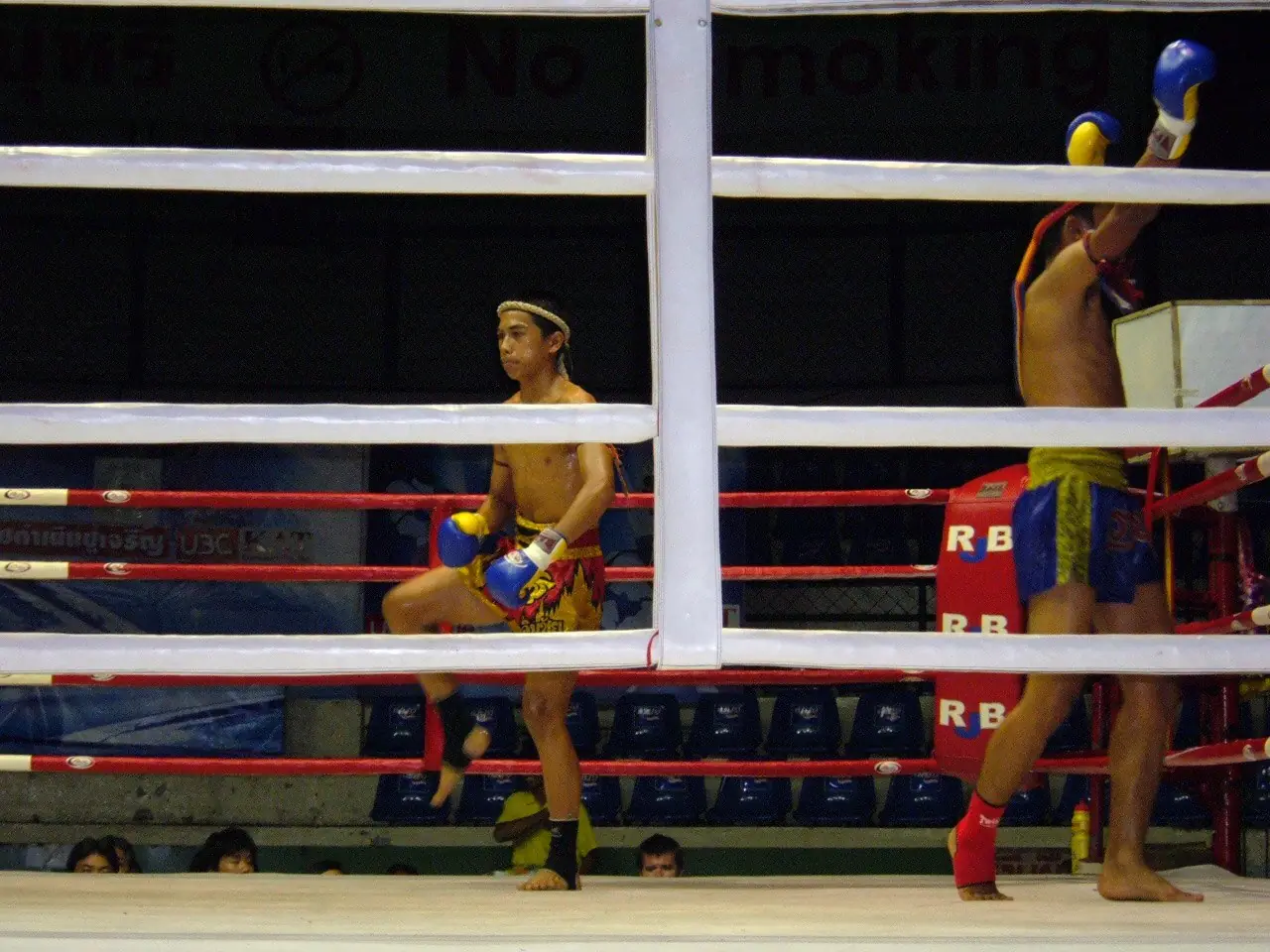
Where to watch a fight in Bangkok
Three venues matter in the capital, and each one fills a different night of the week.
Rajadamnern, opened in 1945, is the one to start with: fights every night, air conditioning, and a 15-minute walk from Khao San Road. Lumpinee moved from Rama IV Road to Ram Intra Road in February 2014 and now fights on Friday and Saturday nights, 30 to 45 minutes from the centre by car. Channel 7 is a television studio where the channel films its Sunday afternoon Muay Thai show.
| Stadium | Fight days | Doors | Tickets | Getting there |
|---|---|---|---|---|
| Rajadamnern | Every night | 5 pm Wed, Thu, Sun; 6 pm other nights | 1,000 – 2,500 THB, balconies up to 10,000 THB | 25 – 28 min walk from MRT Sam Yot |
| Lumpinee | Fri (ONE Lumpinee), Sat (Super Champ) | 5.30 pm | 1,000 – 5,000 THB Fri, 1,000 – 2,000 THB Sat | 1.6 km from BTS Wat Phra Sri Mahathat |
| Channel 7 | Sunday, 2.30 – 4.30 pm | Arrive 1 h early | Free | BTS Mo Chit or MRT Chatuchak |
Each Rajadamnern night has its own card: Knockout on Monday, Tuesday and Friday (7 fights of 3 rounds), New Power on Wednesday and Petchyindee on Thursday (8 fights of 5 rounds), RWS on Saturday with the immersive show at 8.10 pm, and Kiatpetch on Sunday (9 fights). Lumpinee also hosts ONE Fight Night one Saturday morning a month. The planner below shows what is on each night; for the rest of your stay, see our Bangkok guide.
Which stadium is fighting tonight?
Pick a day to see which stadiums have a card, at what time and for how much.
Fight nights
- Channel 7 Boxing StadiumBangkok14:30TicketsFreeReal stadium
Free show in a television studio; strict dress code.
- Lumpinee Boxing StadiumBangkok17:30Tickets1,000–3,500 THBReal stadium
ONE Lumpinee on Friday, Super Champ on Saturday; Ram Intra Road, Bang Khen.
- Rajadamnern StadiumBangkok18:00Tickets1,000–2,500 THBReal stadium
Doors at 5 pm on traditional-card nights (Wed, Thu, Sun), 6 pm on the others.
- Thapae Boxing StadiumChiang Mai21:00Tickets600–1,500 THBSpectator night
In the old town, near Tha Phae Gate; VIP box with free drinks.
- Kalare Night Bazaar Boxing StadiumChiang Mai21:00Tickets600–1,000 THBSpectator night
Next to the Night Bazaar; free for children under 5.
- Chinnarach StadiumKoh Phangan21:00Tickets800–2,000 THBSpectator night
One fight night every two weeks; above Thong Sala.
- Phetchbuncha Boxing StadiumKoh Samui21:00Tickets1,500–2,000 THBSpectator night
Chaweng.
- Samui International Muay Thai StadiumKoh Samui21:15Tickets1,500–3,000 THBSpectator night
Chaweng; doors at 8 pm, free up to 5, half price from 6 to 10.
- Ao Nang Landmark Boxing StadiumKrabi21:00Tickets1,200–1,500 THBSpectator night
Inside the Ao Nang Landmark night market.
- Ao Nang Krabi International Boxing StadiumKrabi21:00Tickets990–1,400 THBSpectator night
Ao Nang; standard, ringside and VIP seats.
- MAX Muay Thai StadiumPattaya19:00Tickets1,500 THBSpectator night
5 fights on weekdays; 4 fights from 7.45 pm at weekends.
- Patong Boxing StadiumPhuket21:00Tickets1,500–1,800 THBSpectator night
T-shirt and transfer from Patong, Karon and Kata included.
- Bangla Boxing StadiumPhuket21:00Tickets1,500–1,900 THBSpectator night
Patong; doors at 8 pm, T-shirt included.
Stadiums publish their cards month by month and times can change: check again the week of your trip.
What happens during a fight night?
A card lasts 2 to 3 hours and follows the same ritual in every stadium.
The weaker fights open the evening and the best bouts close it, so there is no need to be seated at the first bell. At Rajadamnern, Knockout nights finish around 9 pm and World Series nights around 10 pm. Arrive 30 to 45 minutes before the first fight to get through the bag check.
- 1Some stadiums play the royal anthem before the card: stand still until it ends.
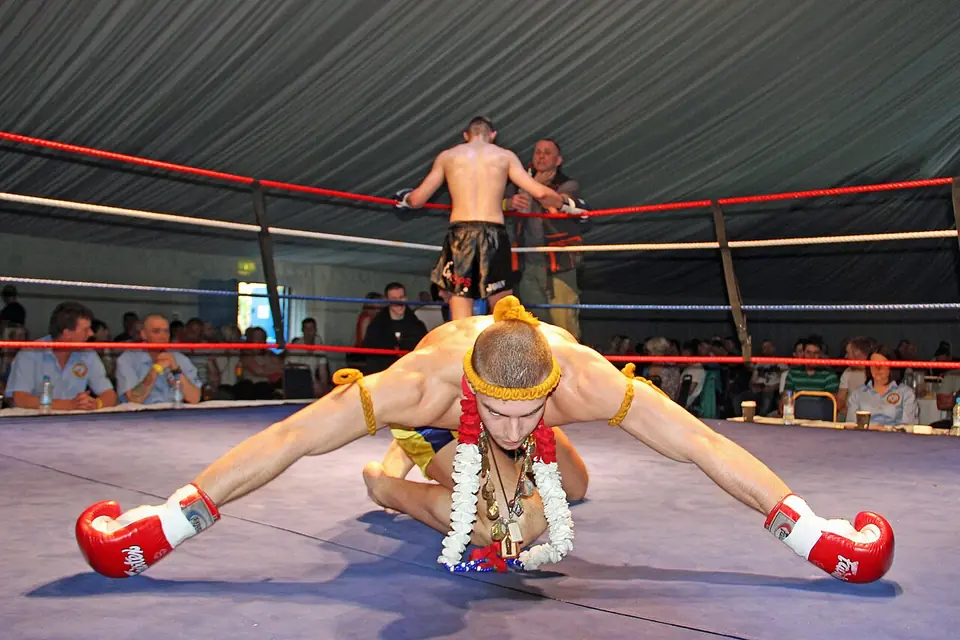
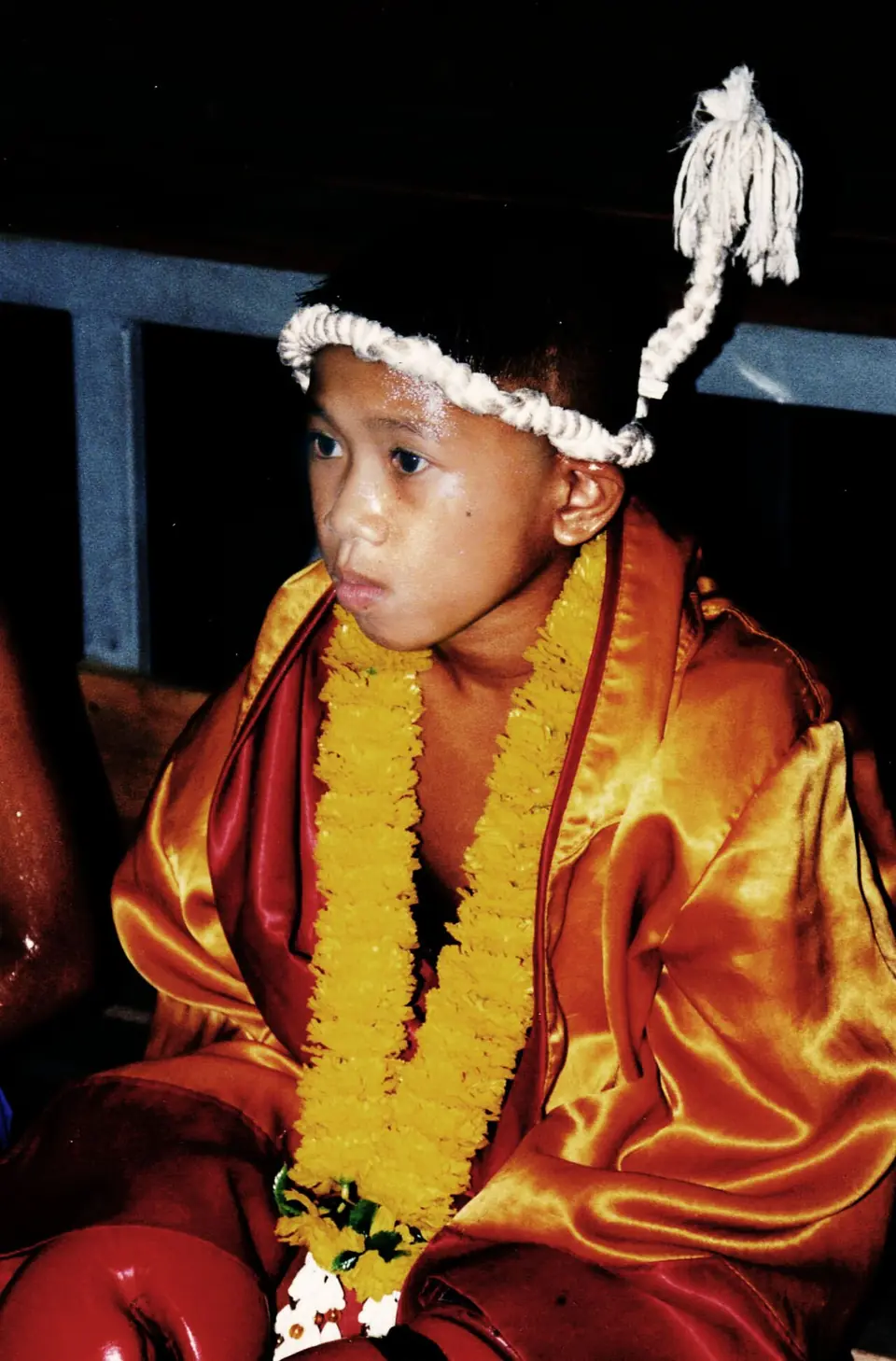
- 2Each fighter enters wearing the mongkon, a headband blessed in his camp, and performs the wai khru ram muay, a slow dance of respect to his teacher. Stay seated and quiet.
- 3A professional fight runs 5 rounds of 3 minutes with 2 minutes of rest; the first round is deliberately slow.
- 4The sarama plays live throughout: a pi java oboe, two drums and cymbals, speeding up as the fight heats up.
- 5The best fights come last: the crowd and the gamblers are loudest for the final bouts.
There is no guaranteed end time, since a knockout can end a fight early. Plan your ride back before the last bout: our guide to getting around Thailand covers taxis and apps at night.
Real stadium or tourist show: which should you choose?
The fights are real everywhere; what changes is the level, the crowd and the atmosphere.
A Bangkok stadium
The real sportRajadamnern, Lumpinee or Channel 7: top-level fighters, 5-round traditional cards, a mostly Thai crowd and gamblers whose shouting you hear from the street.
A provincial stadium
An easy eveningChiang Mai, Phuket, the islands: shorter cards, a mostly foreign crowd, extras such as sword-fighting or blindfolded bouts.
If you are only in Bangkok for a couple of nights, one Rajadamnern or Lumpinee evening is worth more than any beach show. If your trip skips the capital, a provincial stadium is still a good night out: Thapae in Chiang Mai keeps a live sarama band and a few shouting gamblers in the background.
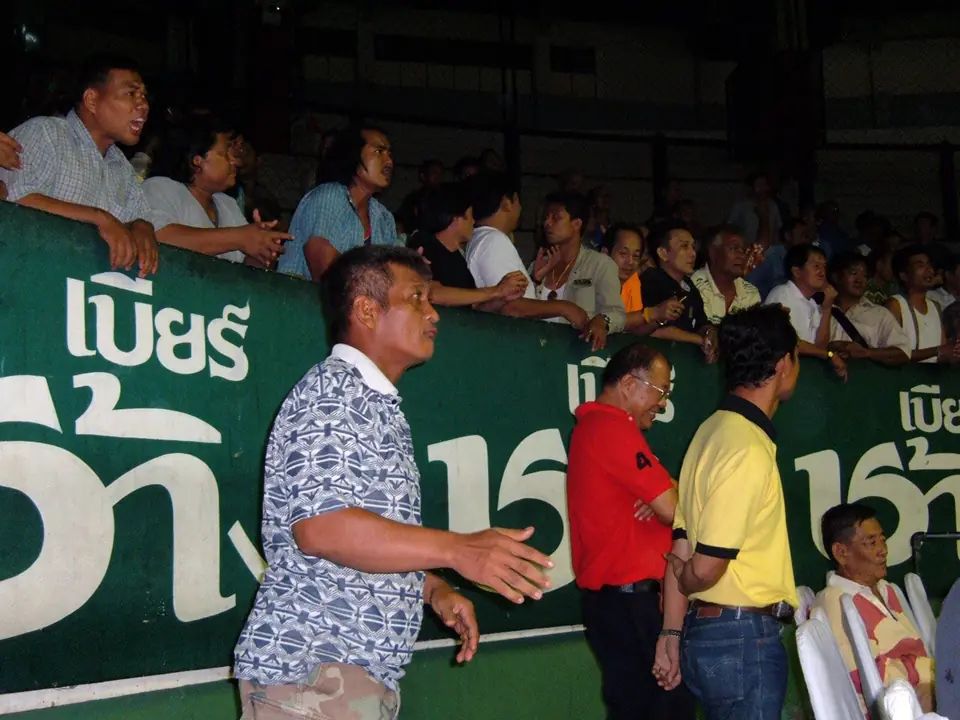
- Gamblers with hand signals in the cheaper stands: a real stadium.
- A live band playing the sarama: a good sign, even outside Bangkok.
- 5-round fights: the traditional format; 3 rounds is the entertainment format.
- Fan cams, sword numbers or blindfolded boxing: a show built for spectators.
Where to watch a fight outside Bangkok
Every big tourist area has its stadium, and the nights are listed in the planner below.
Chiang Mai
CheapestThapae, in the old town, fights Monday to Saturday from 9 pm; Kalare on Monday, Wednesday, Friday and Saturday. Same prices in every stadium: 600 THB standard, 1,000 THB ringside.
Phuket
Every nightBangla fights every night from 9 pm, Patong Monday to Saturday. A T-shirt comes with every ticket, and Patong adds the transfer from Patong, Karon and Kata.
Koh Samui
FamiliesSamui International on Tuesday, Friday and Sunday, free up to 5 and half price from 6 to 10. Phetchbuncha in Chaweng takes Monday, Wednesday and Saturday.
Koh Phangan
Every two weeksChinnarach holds a fight night every two weeks, 9 to 11.30 pm, from 800 THB. Check the date as soon as you land.
Pattaya
Early startMAX Muay Thai Stadium fights seven nights a week from 7 pm, with a single 1,500 THB seat: the only stadium that finishes before 9.30 pm.
Krabi
Ao NangAo Nang Landmark, inside the night market, on Tuesday, Thursday, Saturday and Sunday; Ao Nang Krabi International on Monday and Friday, from 990 THB.
Chiang Mai is the cheap option: 600 THB, against 1,500 THB for a basic seat in the beach resorts. To fit a fight night into a stay, see our guides to Chiang Mai, Phuket and Koh Samui.
How much is a ticket, and what does it include?
Official prices are published by every stadium; the difference is in what comes with the seat.
At Rajadamnern, most foreign visitors sit between the LEO section at 1,500 THB and Ringside at 2,500 THB. The 1,000 THB Third Class seats are mostly sold to Thai citizens, and both big Bangkok stadiums charge foreigners more than locals. Pattaya is the only stadium to publish its Thai rate: 800 THB against 1,500 THB.
| Stadium | Official prices | Included |
|---|---|---|
| Rajadamnern (Bangkok) | 3rd class 1,000 · LEO 1,500 · Club 1,800 · Ringside 2,500 THB | LEO is the legal public betting floor |
| Lumpinee Sat (Bangkok) | 1,000 · 1,500 · 2,000 THB | 10% off on the official site, free under 120 cm |
| Thapae (Chiang Mai) | 600 · 1,000 · 1,500 THB | VIP: air-conditioned Plexiglas box, free drinks |
| Patong (Phuket) | 1,500 · 1,800 THB | T-shirt, transfer from Patong, Karon, Kata |
| Samui International | 1,500 · 2,000 · 2,500 · 3,000 THB | Premium: one drink |
| MAX (Pattaya) | 1,500 THB | Single VIP seat |
A hotel transfer is never included by default, except at Patong when you book through the promoter. Reseller packages labelled with transfer are useful if you are staying far from the stadium, especially for Lumpinee.
Where should you train?
Every region has good camps; the choice depends on the setting you want around the gym.
Phuket, between Chalong and Rawai, has the biggest international camps, with rooms, food and several disciplines on site. Chiang Mai is cooler and cheaper for long stays. Bangkok puts you next to the stadiums, and costs the most once you add accommodation.
| Region | Setting | Group class | One month of training |
|---|---|---|---|
| Phuket (Rawai, Chalong) | Large fitness-resort camps | 500 – 600 THB | 12,000 – 16,800 THB |
| Chiang Mai | Cooler, long stays | 400 THB | 16,300 THB |
| Bangkok | Next to the stadiums | 500 – 700 THB | Most expensive with a room |
| Koh Samui | Family gyms and resorts | 400 THB | 7,500 – 11,000 THB |
| Koh Phangan | Small gyms, yoga crowd | 300 – 400 THB | 7,000 – 10,000 THB |
| Krabi (Ao Nang) | Cheapest on the coast | 250 THB | 6,500 – 12,000 THB |
| Pattaya | City gyms, Fairtex | 800 THB | 16,500 THB |
A camp class lasts 2 hours, twice a day from Monday to Saturday: warm-up, shadow boxing, 5 rounds of 3 minutes on the pads, bag work, clinch, conditioning. A 1.5 to 3-hour tourist class costs several times more for a single taste. For a first week, book one drop-in class before paying for a package.
What does a camp really cost in 2026?
The official Tiger Muay Thai grid in Phuket gives a clear idea of the top of the market.
| Option (Tiger Muay Thai, Phuket) | 1 week | 1 month | 3 months |
|---|---|---|---|
| Muay Thai training | 4,400 THB | 13,500 THB | 34,500 THB |
| All classes | 5,500 THB | 16,800 THB | 43,000 THB |
| Full board, standard room | 14,500 THB | 42,800 THB | – |
| Single group class | 500 THB | – | – |
| Private session (1 h) | 800 THB | – | – |
| Day pass | 1,000 THB | – | – |
Staying off-package, a standard bungalow at the camp costs 16,000 THB a month and a Thai meal 80 to 120 THB. At Bangtao, on the other side of Phuket, a day pass is 900 THB and a month of all classes 16,500 THB. Several camps add 7% VAT on top of the listed prices: check before you pay.
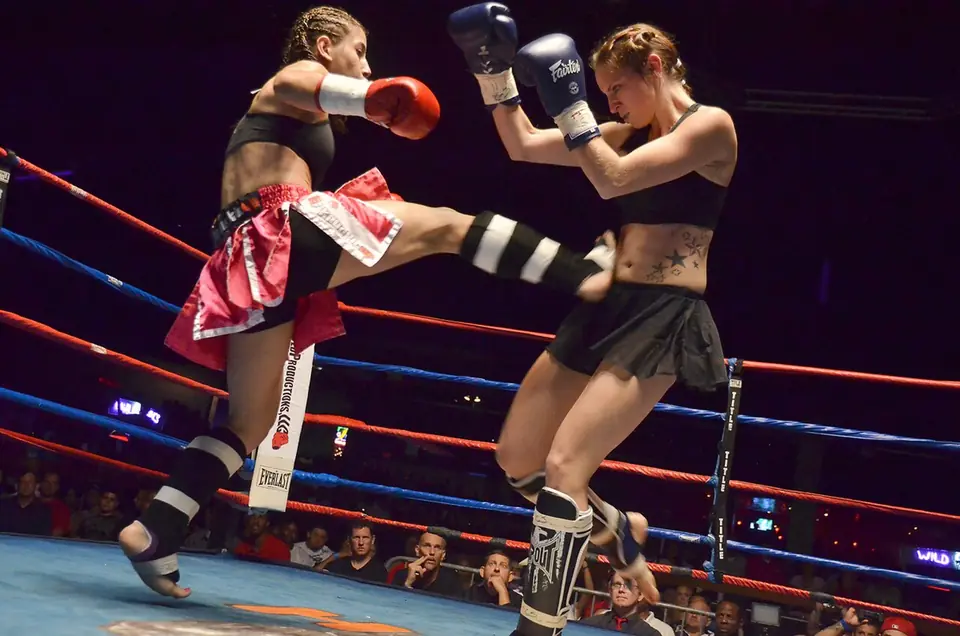
Complete beginner, woman, child or teenager: can you train?
Yes: every camp listed here takes complete beginners, and no fitness level is required.
Complete beginner
No level requiredYou start with a trainer on stance and basic strikes before moving to pads and bag. Tiger Muay Thai runs separate Beginner classes, 8 to 10 am and 3 to 5 pm.
Women
Routine in big campsThe big Phuket camps have separate changing rooms, and Over The Top in Ao Nang runs a Women’s Camp. Nobody should push you into hard sparring: if a trainer does, change trainer or camp.
Children 6 to 12
Kids programmeThe Camp in Chiang Mai runs a kids programme on weekdays from 5.30 to 6.30 pm: 7,500 THB for 10 sessions. At Sinbi in Phuket, children join adult classes with a guardian present.
Teenagers
Adult classesAfter 12, teenagers train in the regular adult group classes: book a beginner slot and ask the camp about sparring.
The one piece of advice every camp gives: start with one session a day. The heat and the intensity catch up with you within days, and you can stop, drink and rest during a class without anyone minding.
- Bring your own hand wraps: camps sell them but do not rent them.
- Gloves can be rented for 50 THB a session, but your own are more hygienic.
- Sparring means your own gloves, shin guards, groin guard and mouthguard.
- Carry water and a towel.
Staying for several months: which visa?
Two visas cover long training stays, and Muay Thai is named in both.
The DTV (Destination Thailand Visa) lists Muay Thai among the soft power activities it covers. You apply online through the Thai e-Visa portal, before travelling and from outside Thailand.
- 1Bank statements for the last 3 months showing a balance of at least 500,000 THB.
- 2Proof of residence in the country where you apply.
- 3An acceptance letter from the camp or the organisation running the training.
- 4Passport and a recent photo, plus a criminal record certificate.
For long courses, camps also arrange the ED (education) visa for Muay Thai students: ask your camp what it provides and what it expects in return, such as a minimum number of sessions a week. The general rules are in our Thailand visa guide.
Etiquette, insurance and heat: what to know
A few simple habits, in the stands and in the gym.
- Photos without flash from your seat are fine at Rajadamnern; stay seated to take them.
- Keep your feet off seats and railings, and never throw anything into the ring.
- Cheer your fighter, but do not heckle fighters or officials.
- Beer is sold in most Bangkok stadiums; glass bottles and outside drinks stay at the door.
- Stay in your section: changing zones after entry is not allowed at Rajadamnern.
Children are welcome: Rajadamnern has no age limit, Lumpinee lets children under 120 cm in free, and teenagers enjoy the big Bangkok nights most. Knockout cards are the most brutal of the week, so pick a traditional 5-round night with young children.
The cool season, mid-October to mid-February, is the easiest time to train; April is the hottest month, and on Samui March to May is draining. Drink before you are thirsty and add electrolyte sachets from 7-Eleven. See when to go to Thailand, our first trip checklist and more things to do between sessions.